The Home Maintenance Roadmap Every Homeowner Should Have
It always seems to happen at the worst possible time.
The air conditioner stops working during a heat wave. The water heater fails right before family arrives for the holidays. The roof leak appears during the first major storm of the season.
Most homeowners think these events are bad luck. Often, they're not. They're the result of small maintenance issues that went unnoticed for months — or even years.
A worn capacitor becomes a failed HVAC system. A loose shingle becomes a roof leak. A slow plumbing drip becomes water damage.
Most expensive home repairs don't happen suddenly. They develop quietly over time.
That's why every homeowner needs something more valuable than a toolbox. They need a roadmap.
Why homeowners get surprised
Homeownership is busy. Between work, family, travel, and everyday life, it's easy to assume everything is fine as long as nothing appears broken.
Many homeowners operate under a simple philosophy: "If it isn't broken, don't fix it."
The problem is that homes rarely fail all at once. A home is made up of interconnected systems that age gradually.
Your roof doesn't wake up one morning and decide to leak. Your air conditioner doesn't suddenly become inefficient overnight. Your water heater doesn't go from perfect to failed in a single day.
Instead, there are warning signs. Small signs. Easy-to-ignore signs. Unfortunately, those signs often go unnoticed until a repair becomes an emergency.
The homeowners who avoid the biggest surprises aren't necessarily spending more money. They're simply paying attention sooner.
The true cost of deferred maintenance
One of the biggest misconceptions about maintenance is that it costs money. In reality, deferred maintenance is usually what costs money.
Maintenance is often the less expensive option. Ignoring maintenance is where costs multiply.
HVAC failure: A neglected HVAC system may run less efficiently for months before failure. Dirty filters, restricted airflow, worn components, and deferred service force the system to work harder. What could have been a maintenance visit becomes a major repair — or a full system replacement.
Roof leaks: Most roof leaks begin with a small vulnerability — a damaged shingle, a failed flashing detail, a minor seal failure. Water finds the opening and begins a process homeowners don't see. By the time the stain appears on the ceiling, the damage may already include insulation, drywall, framing, and mold concerns.
Water damage: Water is one of the most destructive forces in any home. A small plumbing leak can damage cabinets, flooring, drywall, trim, and personal belongings before it is discovered.
Appliance failures: Water heaters, dishwashers, washing machines, and refrigerators all have finite lifespans. Most don't fail without warning. The warning signs are simply easy to miss.
The four seasons of homeownership
Just as your vehicle requires routine service, your home benefits from seasonal attention. The goal isn't to spend every weekend doing maintenance. The goal is to stay ahead of problems before they become expensive.
Spring — Recovery and inspection. Spring is the season to evaluate how your home handled the previous year. Focus on roof inspections, exterior caulking, drainage and grading, gutters and downspouts, and HVAC servicing. Spring is also an excellent time to identify moisture issues before summer humidity arrives.
Summer — Performance season. Summer places enormous stress on a home's systems. Air conditioners work hardest, utility bills increase, humidity becomes a challenge, and storm activity intensifies. Pay attention to HVAC performance, air filters, indoor air quality, attic temperatures, and weather readiness. If your home struggles during summer, it may be revealing opportunities for improvement.
Fall — Preparation season. Fall is often the most overlooked maintenance season. Many homeowners focus on holidays and family activities. Meanwhile, their home is preparing for the months ahead. Fall priorities include roof inspections, tree trimming, drainage checks, safety equipment testing, and weather readiness planning.
Winter — Protection and planning. Even in warmer climates, winter is an opportunity to evaluate and prepare. Focus on water systems, plumbing protection, safety systems, indoor air quality, and long-term improvement planning. Winter is also a great time to create next year's maintenance roadmap.
The home maintenance snowball effect
One of the most expensive mistakes homeowners make is assuming problems remain isolated. They rarely do.
Consider this example: a small roof leak leads to attic moisture, which leads to mold growth, which damages insulation, which reduces energy efficiency, which leads to ceiling repair, which leads to interior painting.
Small problems rarely stay small. The longer a problem remains unresolved, the larger — and more expensive — it becomes.
The same pattern occurs with HVAC systems, plumbing leaks, drainage issues, exterior paint failure, water intrusion, and poor ventilation.
Why a roadmap matters
Imagine owning a vehicle without ever changing the oil. Or managing your finances without a budget. Or skipping annual health checkups for years. Most people understand the value of planning in those areas. Yet many homeowners approach maintenance reactively.
Something breaks. Then they fix it. Then they wait for the next thing to break.
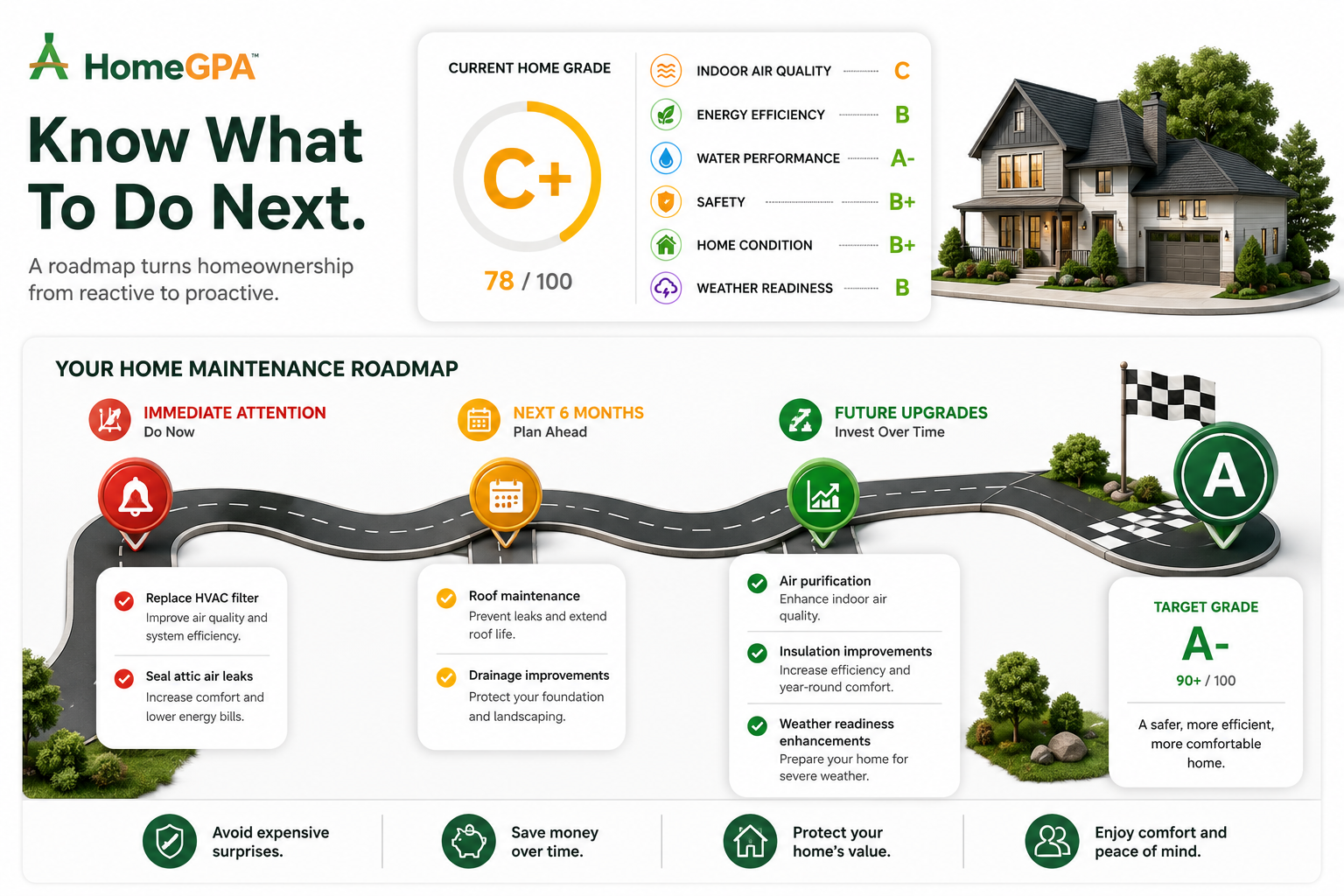
A roadmap changes everything. Instead of asking, "What's broken?" you begin asking, "What's next?"
A roadmap creates confidence. It reduces surprises. It transforms homeownership from reactive to proactive.
How HomeGPA helps
A grade tells you where you stand. A roadmap tells you where to go. That's what makes the combination powerful.
HomeGPA helps homeowners understand what needs attention now — the items that should move to the top of the list. It clarifies what can wait, so homeowners aren't overwhelmed by every issue at once. And it highlights which improvements deliver the greatest value across comfort, efficiency, safety, health, property value, and weather readiness.
The result is a clearer path forward. Not a list of problems. A plan.
The best homes are maintained intentionally
Most homeowners know their home's value. Few have a clear plan to protect it.
The homes that age the best aren't necessarily the newest. They aren't necessarily the most expensive. They're the ones that are maintained intentionally.
The homeowners who avoid the biggest repair bills are rarely the luckiest. They're usually the most prepared.
Because a home isn't just something you own. It's something you manage. And every great home needs a roadmap.
Know Your Home's Grade
Your home affects your comfort, energy bills, air quality, water performance, safety, and long-term value. HomeGPA helps you understand how your home performs and what to improve first.
Related articles
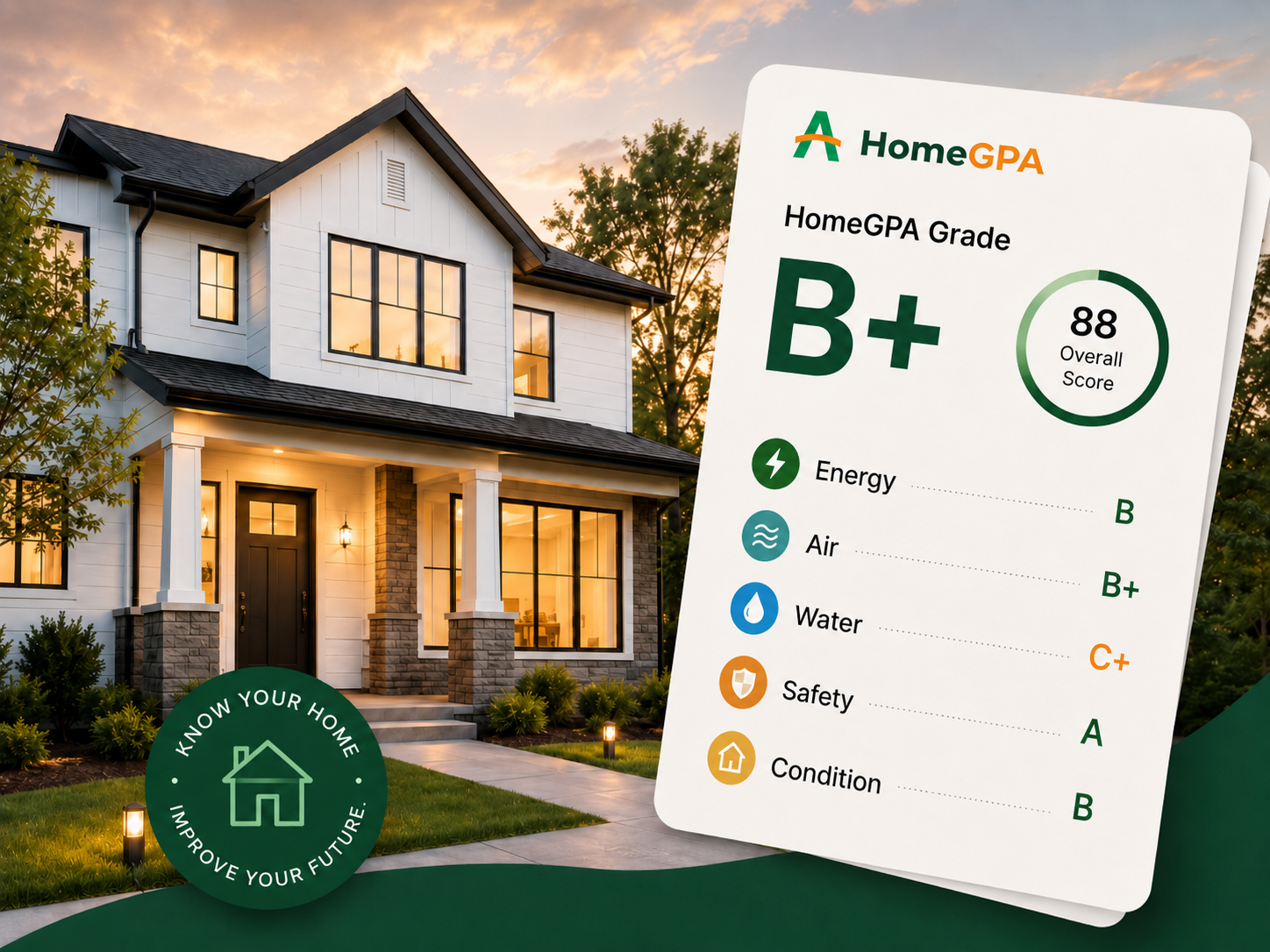
Why Every Home Should Have a Grade
Most homeowners know their credit score, but not how well their home performs. Here's why a HomeGPA changes that.
Read article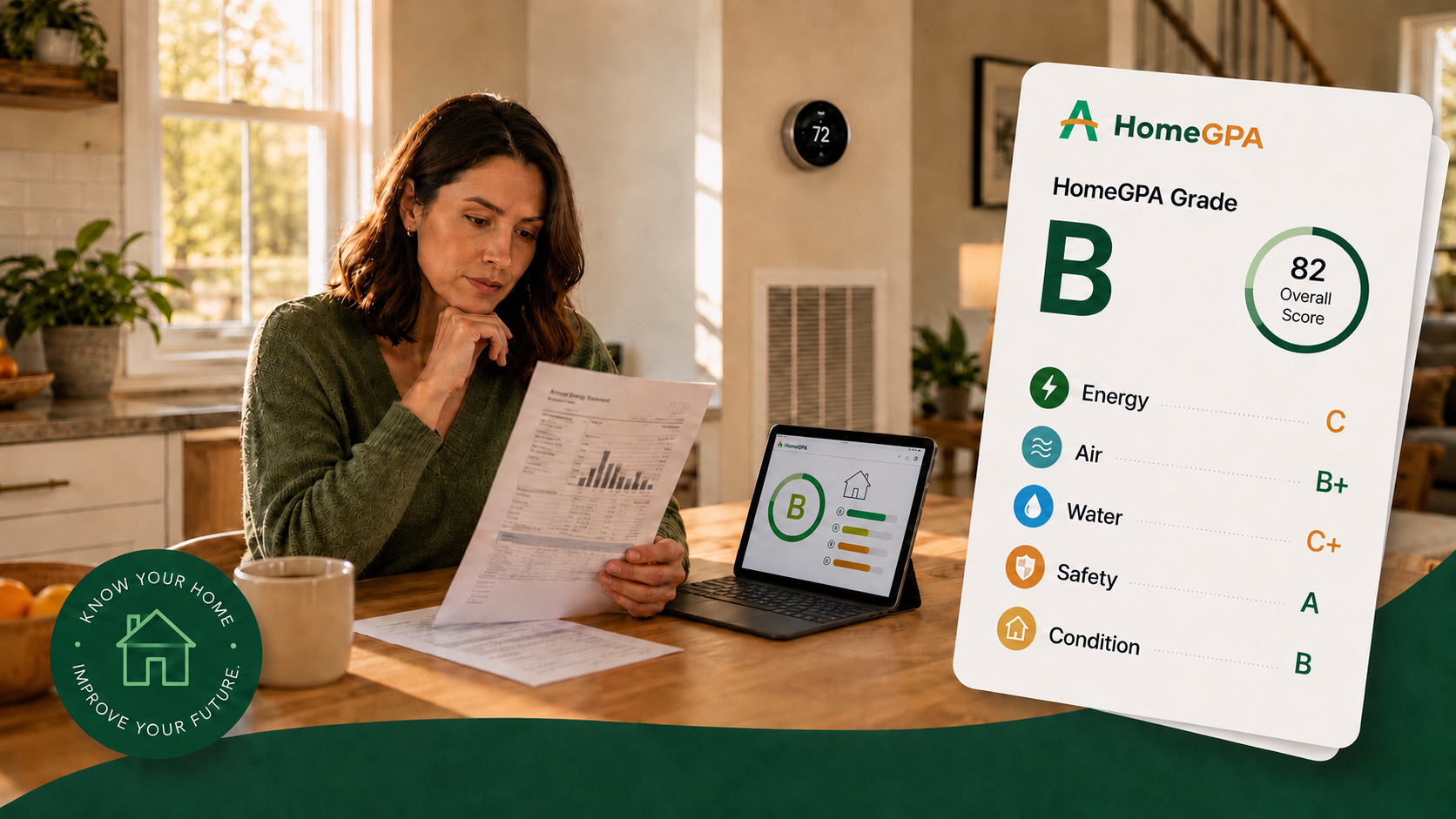
What Your Energy Bill May Be Telling You About Your Home
Your monthly bill is a quiet report card on insulation, ductwork, windows, and HVAC. Here's how to read it.
Read article
Don't List Yet: How to Avoid Leaving Money on the Table Before Your Home Hits the Market
What if the difference between a strong offer and a disappointing one has nothing to do with your asking price? Small maintenance issues buyers notice can quietly cost sellers thousands.
Read article