What Your Energy Bill May Be Telling You About Your Home
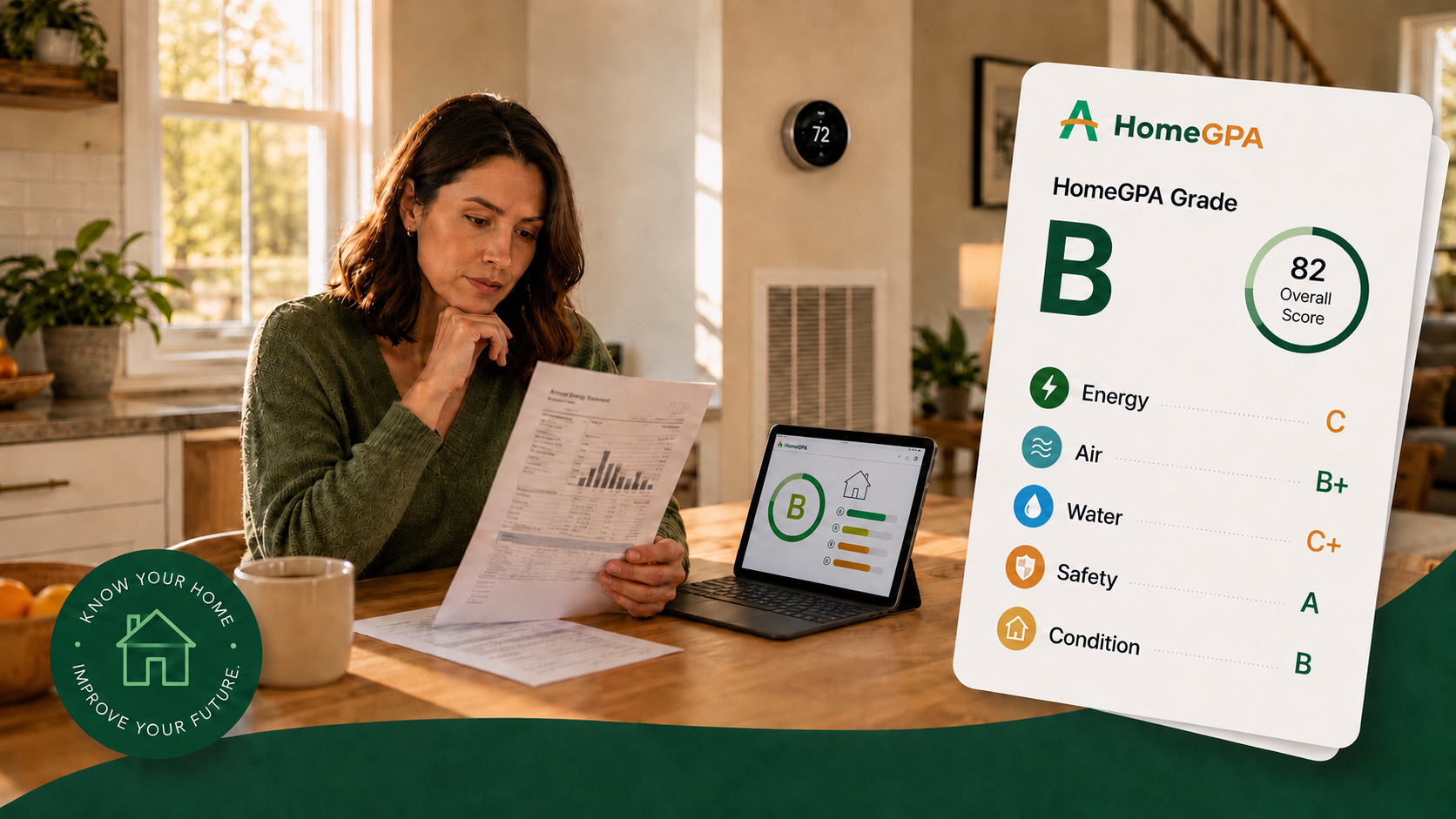
Most homeowners look at their monthly energy bill and focus on one thing: the total amount due.
But your energy bill is actually one of the most important performance reports your home produces every month.
It provides clues about how efficiently your home is operating, how hard your HVAC system is working, whether conditioned air is escaping, and even whether hidden maintenance issues may be developing behind the scenes.
In many cases, rising energy costs are not caused by using more electricity.
They're caused by a home that isn't performing as well as it should.
Your Home Is Constantly Working
Your home is more than four walls and a roof. It is a system.
Every day, your insulation, attic, ductwork, windows, HVAC equipment, roofing materials, ventilation systems, and air barriers work together to maintain a comfortable indoor environment.
When one component underperforms, the entire system becomes less efficient. The result often appears first on your utility bill.
A home with strong performance typically experiences lower energy costs, more consistent temperatures, better humidity control, improved indoor air quality, reduced wear on HVAC equipment, and greater long-term property value.
A home with poor performance often experiences the opposite.
The Hidden Costs of an Underperforming Home
Many homeowners assume higher energy bills are simply the result of rising utility rates. While rates certainly matter, the condition of your home often plays a larger role than people realize.
An underperforming home can quietly cost homeowners thousands of dollars over its lifetime through excess energy consumption, premature HVAC replacement, moisture damage, mold growth, poor indoor comfort, and increased maintenance costs.
The challenge is that these issues often develop gradually, making them difficult to recognize until significant costs have already accumulated.
What Your Energy Bill May Be Revealing
Rising Cooling Costs
In Florida, air conditioning represents one of the largest energy expenses for homeowners. If cooling costs continue to increase despite similar usage habits, your home may be experiencing insufficient attic insulation, duct leakage, aging HVAC equipment, air infiltration through windows and doors, or excess attic heat gain.
Your HVAC system may be working longer and harder simply to maintain the same level of comfort.
Seasonal Spikes That Don't Make Sense
Some variation is normal. However, large increases that seem disproportionate to weather conditions may indicate hidden inefficiencies. Many homeowners become accustomed to rising utility bills without realizing their home's performance has slowly declined over time.
Constant HVAC Operation
If your air conditioner rarely shuts off during the day, your home may be struggling to hold conditioned air. This doesn't necessarily mean the HVAC system is failing. It may mean the home itself is making the equipment work harder than necessary.
Signs Your Home Is Losing Performance
Your utility bill is only part of the story. Common signs of performance issues include uneven room temperatures, excess humidity, excessive dust, and drafts and hot spots.
Uneven Room Temperatures
One room feels comfortable while another feels hot or humid. This often indicates airflow problems, insulation deficiencies, or ductwork issues.
Excess Humidity
Florida homes naturally battle humidity. When indoor humidity remains elevated, homeowners may notice musty odors, condensation, increased discomfort, and mold growth potential.
Excessive Dust
A home that seems impossible to keep clean may actually be pulling unfiltered air through leaks and gaps in the building envelope.
Drafts and Hot Spots
Air leaks force conditioned air to escape while allowing outdoor air to enter. Even small leaks can significantly impact energy performance over time.
The Connection Between Energy and Health
Many homeowners think of energy efficiency as purely a financial issue. In reality, home performance directly impacts health and wellness.
When a home struggles to control temperature, humidity, and airflow, it can create conditions that contribute to increased allergens, dust accumulation, mold growth, poor indoor air quality, respiratory irritation, and reduced comfort.
A high-performing home is often a healthier home because it manages air movement, moisture, and ventilation more effectively.
The Impact on Property Value
Modern buyers are paying closer attention to operating costs than ever before. They want to know how much it costs to heat and cool the home, how old the HVAC system is, whether the home is energy efficient, and whether the property has been properly maintained.
Homes with strong performance characteristics often become more attractive because buyers recognize the value of lower operating costs and fewer future surprises. A home that performs better is often perceived as a home that has been cared for better.
Why Home Performance Matters in Florida
Florida presents unique challenges for homeowners. Extreme temperatures, humidity, intense sunlight, severe weather, and year-round cooling demands place constant stress on a home's systems. What worked ten years ago may no longer be sufficient today.
Even well-built homes gradually lose performance as materials age and systems wear. Understanding how your home is performing today helps you make smarter decisions about where improvements will have the greatest impact.
Know Your Home's Grade
You know your credit score. You probably know your home's value. But do you know how well your home performs?
Your HomeGPA provides a simple way to understand your home's performance across key categories including energy efficiency, indoor air quality, water performance, safety, condition, and storm readiness.
Because the first step toward improving your home is understanding where it stands today.
A better-performing home isn't just about saving money. It's about creating a healthier, more comfortable, more valuable place to live. And every improvement starts with knowing your grade.
Know Your Home's Grade
Your home affects your comfort, energy bills, air quality, water performance, safety, and long-term value. HomeGPA helps you understand how your home performs and what to improve first.
Related articles
Why Every Home Should Have a Grade
Most homeowners know their credit score, but not how well their home performs. Here's why a HomeGPA changes that.
Read article
Don't List Yet: How to Avoid Leaving Money on the Table Before Your Home Hits the Market
What if the difference between a strong offer and a disappointing one has nothing to do with your asking price? Small maintenance issues buyers notice can quietly cost sellers thousands.
Read article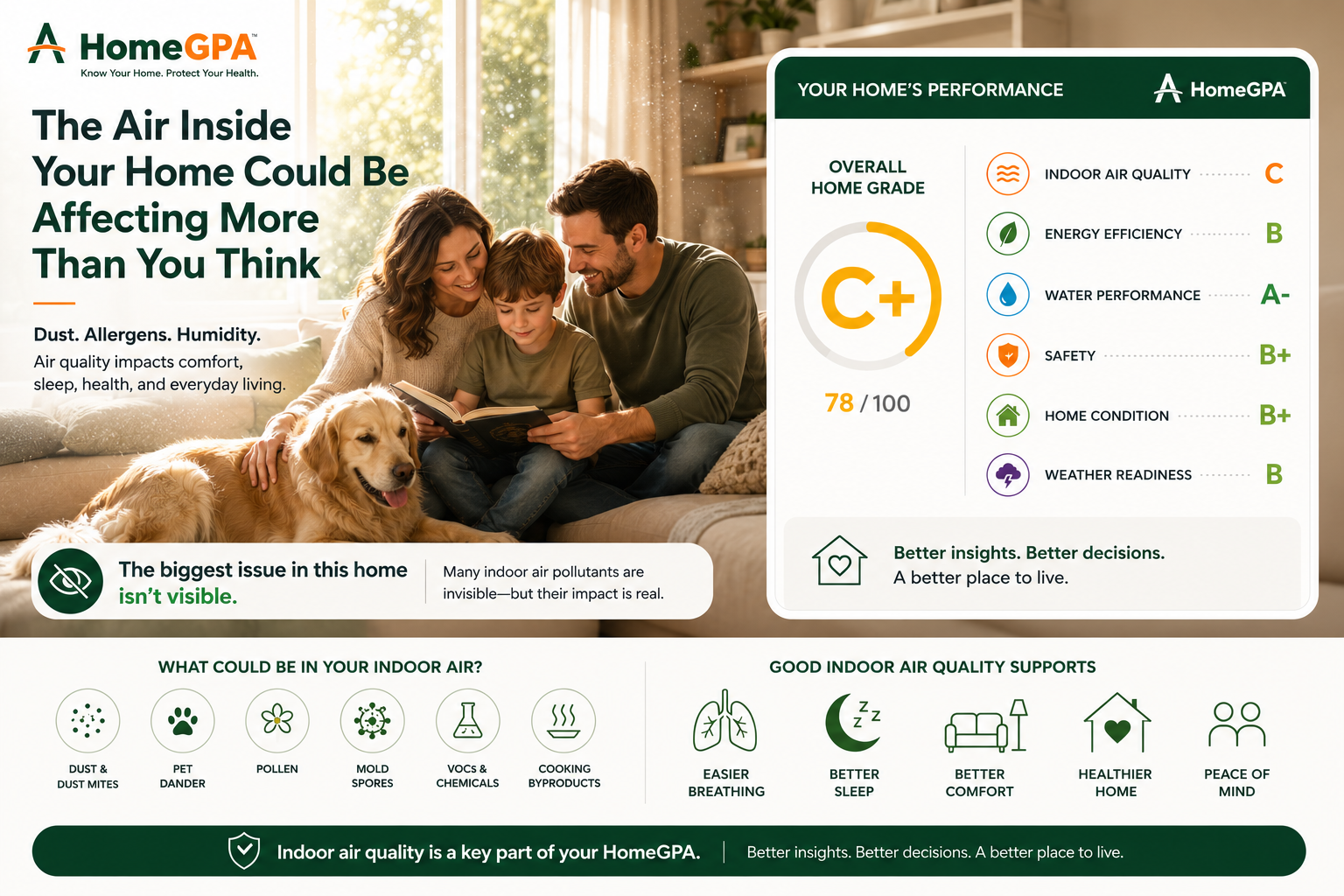
Why Indoor Air Quality Matters More Than Most Homeowners Think
Dust, allergens, and humidity quietly shape comfort, sleep, and health. Here's what affects the air inside your home — and what to do.
Read article