Why Indoor Air Quality Matters More Than Most Homeowners Think
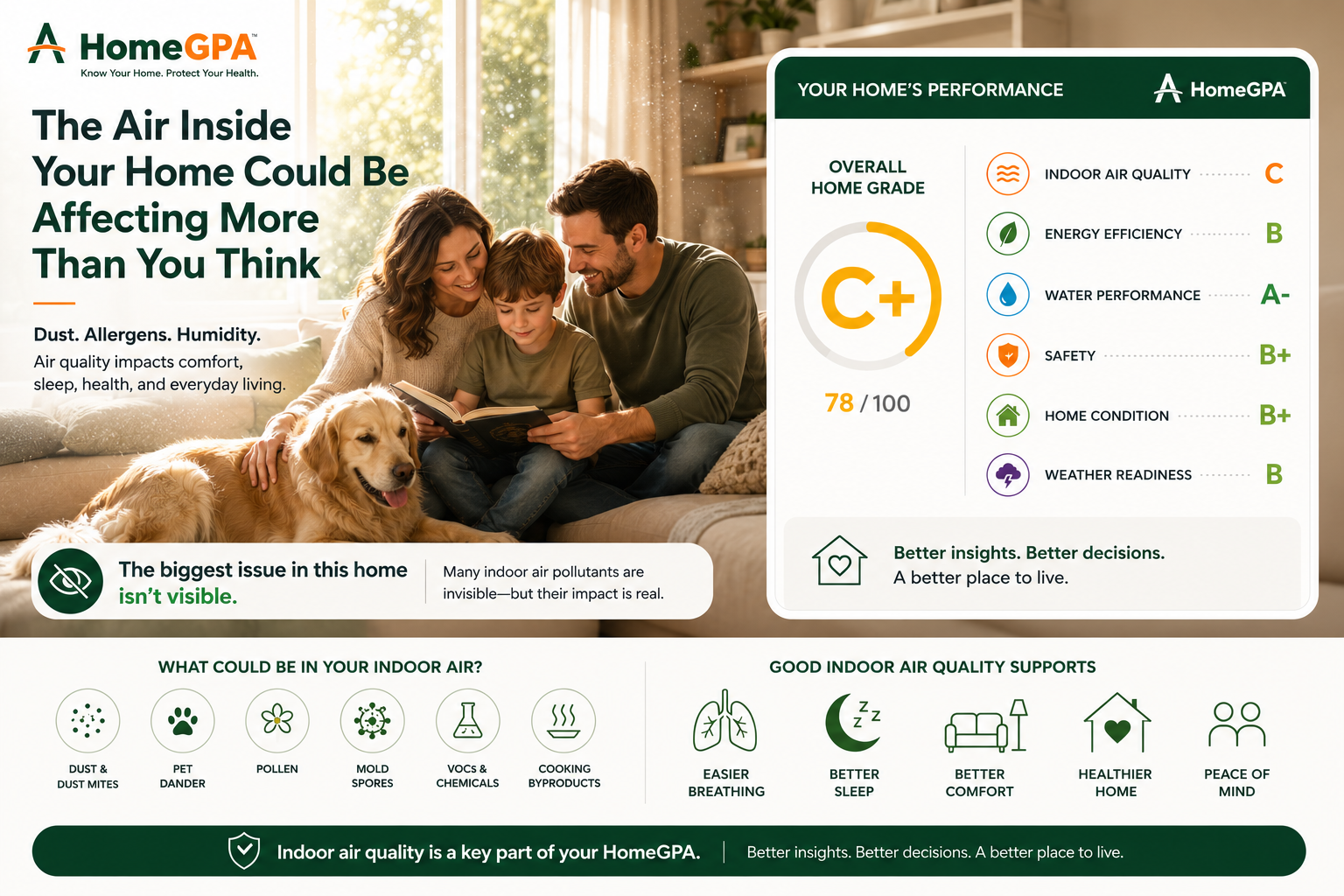
Most homeowners pay attention to the air quality outside their home.
They check weather reports, pollen counts, air quality alerts, and humidity levels.
But few stop to think about the air they breathe inside their own home.
That's surprising when you consider that most people spend the majority of their lives indoors.
The reality is that the quality of the air inside your home can have a significant impact on your comfort, health, sleep quality, energy levels, and overall well-being.
Unlike a leaky faucet or a broken appliance, poor indoor air quality often goes unnoticed because you can't always see it.
The Problem You Can't See
Sarah thought her family's allergies were simply part of living in Florida.
Her son woke up congested most mornings. The house always seemed dusty no matter how often she cleaned. Some rooms felt humid while others felt stuffy.
Nothing appeared obviously wrong. The air conditioning worked. The home looked clean.
But after taking a closer look, several issues were discovered: elevated indoor humidity, inadequate filtration, and duct leakage that allowed dust and contaminants to circulate throughout the home.
The symptoms weren't random. The house itself was contributing to them.
Many homeowners experience similar situations without realizing their home's air quality may be part of the problem.
Signs Your Indoor Air Quality May Need Attention
Poor indoor air quality doesn't always announce itself dramatically. Instead, it often shows up through subtle signs homeowners have learned to live with.
Ask yourself: Does your home seem dusty no matter how often you clean? Do certain rooms feel stuffy or uncomfortable? Do family members experience allergies indoors? Is there a musty smell after rain or humid weather? Do you notice excessive humidity? Are windows frequently fogging or showing condensation? Do you wake up congested or with irritated sinuses?
If you answered yes to several of these questions, your home's air quality may deserve a closer look.
What's Floating Through Your Home?
Many homeowners assume indoor air is cleaner than outdoor air. Unfortunately, that's not always the case.
Indoor air can contain dust and dust mites, pet dander, pollen, mold spores, volatile organic compounds (VOCs), cooking byproducts, cleaning chemical residues, and outdoor pollutants that enter the home.
Because modern homes are designed to be more energy efficient, they can also trap pollutants indoors if ventilation is inadequate. In other words, what enters your home may stay there longer than you think.
Why Humidity Matters More Than Most People Realize
Humidity is one of the most overlooked factors affecting indoor air quality. In Florida, homeowners battle humidity nearly year-round.
When indoor humidity becomes too high, it can encourage mold growth, increase dust mite populations, create musty odors, make temperatures feel warmer, reduce comfort, and impact indoor air quality.
Many homeowners respond by lowering the thermostat. Unfortunately, this often increases energy costs without addressing the actual problem.
Proper humidity control can improve comfort while helping your home operate more efficiently.
The Hidden Impact on Health
Most people think about air quality only when someone has asthma or severe allergies. The truth is that indoor air quality can affect everyone.
Poor indoor air quality may contribute to allergy symptoms, respiratory irritation, headaches, fatigue, poor sleep quality, dry eyes, and increased discomfort.
Children, older adults, and individuals with respiratory conditions are often the most sensitive, but everyone benefits from breathing cleaner air. A healthier home begins with healthier air.
Air Quality and Home Performance Are Connected
Indoor air quality is not an isolated issue. It is connected to nearly every major system in your home.
Your home's HVAC system, ductwork, insulation, ventilation, humidity control, maintenance practices, and building envelope all influence the air your family breathes every day.
This is why solving air quality issues often requires looking at the home as a complete system rather than focusing on a single product or upgrade.
A high-performing home typically manages temperature, humidity, airflow, and filtration more effectively than an underperforming one.
Common Myths About Indoor Air Quality
Myth #1: "My House Is Clean, So My Air Must Be Clean." A spotless home can still contain airborne particles and contaminants that are invisible to the eye.
Myth #2: "My HVAC System Takes Care of Everything." Most HVAC systems are designed primarily to control temperature, not necessarily improve air quality.
Myth #3: "If I Can't Smell It, It's Not a Problem." Many air quality issues have no noticeable odor. Some of the most common indoor pollutants are completely invisible and odorless.
What Homeowners Can Do
Improving indoor air quality doesn't always require major renovations. Simple steps can help: change HVAC filters regularly, monitor indoor humidity levels, schedule HVAC maintenance, seal air leaks, address water intrusion quickly, improve ventilation when necessary, and keep ducts clean and properly sealed.
The most important step, however, is understanding where your home stands today.
Why Knowing Your Home's Grade Matters
Most homeowners know their credit score. Many know the value of their home. Few know whether the air their family breathes every day is helping or hurting their comfort and well-being.
That's why HomeGPA evaluates indoor air quality as part of a complete assessment of your home's performance.
Healthier homes don't happen by accident. They happen when homeowners understand how their homes are performing and where improvements can make the biggest difference.
At the end of the day, your home is more than a structure. It's where your family sleeps, gathers, recovers, and spends much of life's most important moments.
And the air inside it matters more than most homeowners think.
Know Your Home's Grade
Your home affects your comfort, energy bills, air quality, water performance, safety, and long-term value. HomeGPA helps you understand how your home performs and what to improve first.
Related articles
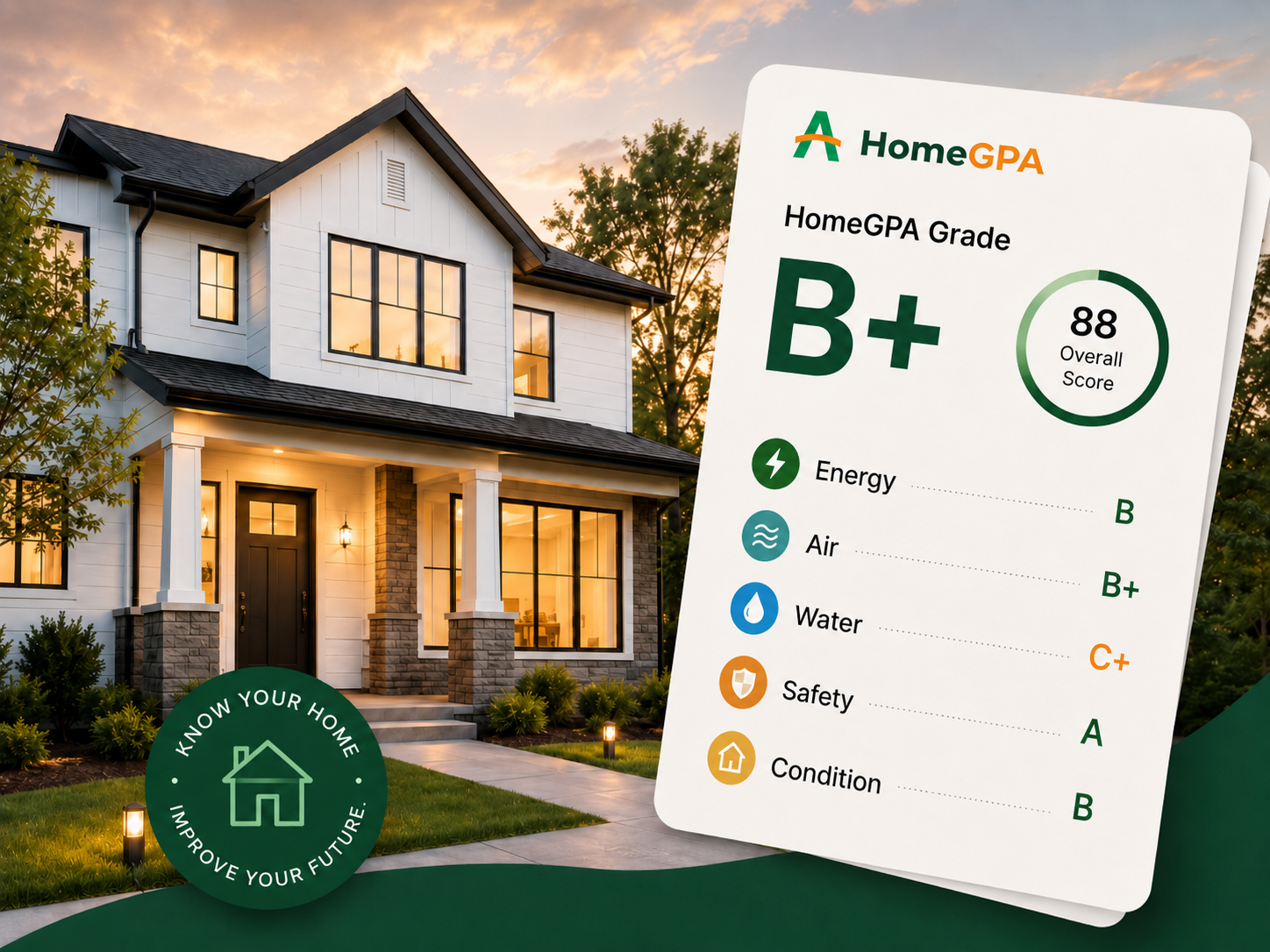
Why Every Home Should Have a Grade
Most homeowners know their credit score, but not how well their home performs. Here's why a HomeGPA changes that.
Read article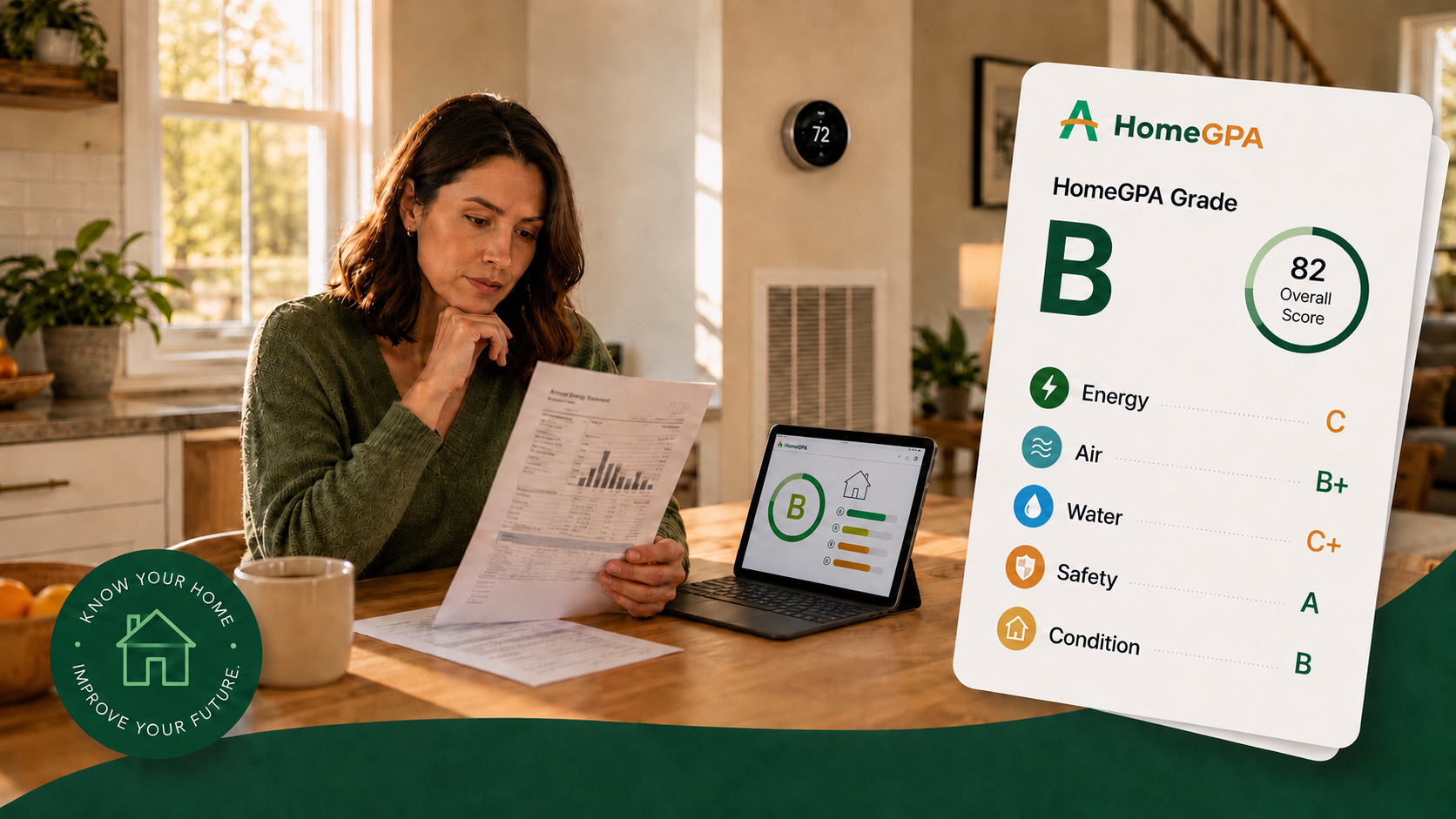
What Your Energy Bill May Be Telling You About Your Home
Your monthly bill is a quiet report card on insulation, ductwork, windows, and HVAC. Here's how to read it.
Read article
Don't List Yet: How to Avoid Leaving Money on the Table Before Your Home Hits the Market
What if the difference between a strong offer and a disappointing one has nothing to do with your asking price? Small maintenance issues buyers notice can quietly cost sellers thousands.
Read article